
Sustainable Food Packaging Trends 2026: Why Businesses Are Switching to Areca Leaf Tableware
Sustainable Food Packaging Trends 2026
Plastic and foam are on their way out. Discover the sustainable food packaging trends 2026 shaping UK and European foodservice, and how areca leaf tableware offers a natural alternative that performs and complies with regulation
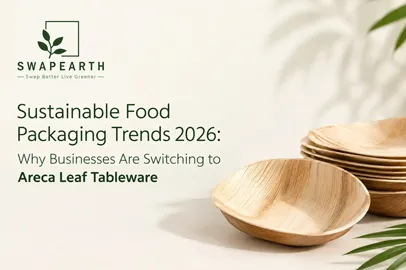
Plastic and foam are on their way out. This guide covers the sustainable food packaging trends 2026 shaping UK, Dutch and European foodservice, and how areca leaf plates, bowls, cups, cutlery and spoons offer a natural alternative that performs, complies with regulation and has a clear end-of-life story. SwapEarth makes them in Karnataka, India, with export-ready supply and private label options.
Start with the single-use items you use most. For most kitchens that means plates, bowls, cups and cutlery." — SwapEarth's Sustainability and Packaging Lead
Sustainable Food Packaging Trends 2026: Why Businesses Are Switching to Areca Leaf Tableware
Restaurants, cafés, caterers, event companies and distributors across the UK, the Netherlands and wider Europe are rethinking what goes on the table and into the takeaway bag. The sustainable food packaging trends 2026 share one message: plastic and foam are on their way out, and buyers want natural alternatives that perform, comply with regulation and have a clear end-of-life story.
Areca leaf tableware is a strong answer to that shift. Made from fallen areca palm leaves, an agricultural by-product, it turns plant material into sturdy plates, bowls, cups, cutlery and spoons. SwapEarth manufactures areca palm leaf tableware in Karnataka, India, and exports it to buyers in the UK, the Netherlands and Europe. This guide covers what is changing this year and how to choose the right products.
A Q&A with SwapEarth's Sustainability and Packaging Lead
What has changed most in foodservice buying this year?
Buyers ask better questions. They want to know what the product is made from, how it performs with real food, and what happens to it after use. A "green" label on its own no longer closes a sale.
Where should a restaurant start?
Start with the single-use items you use most. For most kitchens that means plates, bowls, cups and cutlery. Switching those first has the biggest effect on plastic use.
Areca Leaf Plates Replace Plastic and Foam
Plates are the most visible change. Areca leaf plates are formed from natural leaf material using heat and pressure, and they have a rustic, premium look that plastic can't match. SwapEarth's range covers round, square, rectangular, compartment and pyramid plates, so one supplier can cover a buffet, a thali-style meal or a canapé station.
Regulation is pushing in the same direction. England has already banned single-use plastic plates, cutlery and polystyrene food containers, and other European markets are tightening their own rules.
Areca Leaf Bowls for Soups, Salads and Serving
Bowls are growing quickly for street food, salad bars, dessert stations and catered events. Areca leaf bowls hold their shape with warm and cold food, and larger serving bowls, such as SwapEarth's 7.5" serving bowl, work well for shared dishes at events.
Areca Leaf Cups for Cold Drinks and Small Servings
Cups are one of the hardest single-use items to get right. Buyers now look at plant-based options for dessert cups, sampling cups and small servings. Check the product specification for the drinks you serve, especially hot drinks, before you commit to volume.
Areca Leaf Cutlery and Spoons
Cutlery and spoons are the items most often left on plastic even after the plates have changed. Plant-based cutlery and spoons complete the switch, so the whole meal is served without plastic. That helps a restaurant's message stay consistent and reduces the chance of a customer spotting plastic in a "sustainable" order.
Reduced Plastic and Fewer Mixed Materials
Less plastic is a trend in its own right. Products made from one natural material, without plastic linings or mixed layers, are simpler for buyers to explain and for waste handlers to process.
Takeaway and Delivery Formats
Delivery has changed how packaging is judged. Containers must survive transit, stack well and hold sauces and hot food. Areca leaf food containers, alongside compartment plates and bowls, suit takeaway and event catering where presentation matters as much as strength.
Transparency, Data and Compliance
The EU's Packaging and Packaging Waste Regulation is beginning to apply in 2026, and the UK's Extended Producer Responsibility rules already require packaging data. Both raise the bar for material information and claims. Ask suppliers for:
-
Food-contact compliance documents
-
Material composition details
-
Applicable certifications
-
Disposal guidance
-
Consistent product specifications
Private Label and Custom Ranges
Distributors and restaurant groups increasingly want their own branded sustainable range. SwapEarth offers private label and custom packaging, so importers and wholesalers can build a distinctive areca leaf line for their market.
Export-Ready Supply
Reliable documentation, logistics and export packaging matter as much as the product. For UK, Dutch and European buyers, steady supply and clear communication are part of what makes a supplier trustworthy.
Taken together, these sustainable food packaging trends 2026 show a market that values natural materials, practical performance and honest claims over marketing language.
How to Choose Sustainable Tableware in 2026
When you compare suppliers against sustainable food packaging trends 2026, work through these questions:
What food will it hold?
Hot, cold, oily and wet food each need different strength. Start with your menu.
What is it made from?
Confirm the material and ask about any coatings or additives
Is it food-contact compliant?
Ask for documentation before you buy.
What happens after use?
Know the disposal route in your market.
Does the range cover your needs?
Plates, bowls, cups, cutlery and spoons from one source simplify ordering and keep your look consistent.
Can the supplier deliver consistent quality?
Check size, strength, finish and batch consistency, not just a good sample.
What is the total cost?
nclude freight, storage, waste handling and reliability alongside unit price.
Why Areca Leaf Tableware Matters for Restaurants
Areca leaf fits sustainable food packaging trends 2026 because it turns an agricultural by-product into useful tableware, without cutting trees or relying on plastic. It also looks good. Customers notice the natural texture, which supports a restaurant's sustainability story without extra explanation.
Why Choose SwapEarth?
For buyers following sustainable food packaging trends 2026, SwapEarth offers areca leaf plates, bowls, cups, cutlery and spoons made in Karnataka, India, for wholesalers, importers, restaurants and commercial foodservice.
Built for B2B
designed for distributors, retailers, cafés, caterers and event businesses
Quality focus
strict parameters for strength, hygiene and finish
Export ready
documentation, logistics and packaging for international supply
Private label
custom branding to build your own range
Transparent sourcing
ethical sourcing and compliance guide production
Conclusion
The sustainable food packaging trends 2026 favour natural materials, honest claims and dependable supply. Areca leaf plates, bowls, cups, cutlery and spoons let restaurants, caterers and distributors in the UK, the Netherlands and Europe move away from plastic without giving up performance or presentation.
Ready to switch? Contact SwapEarth at info@swapearth.com or through swapearth.com to discuss your requirements and request samples.
Frequently Asked Questions
What is the biggest sustainable packaging trend this year?
Practical, proven sustainability. Businesses want natural materials, clear disposal routes and documented claims.
Is areca leaf tableware good for restaurants?
Yes, for many uses. Areca leaf plates, bowls and containers suit dine-in, takeaway and events. Check the specification for your particular food and drinks
Is compostable tableware always better?
Not always. It works best where composting facilities exist, so check local disposal options first.
Does areca leaf tableware cost more than plastic?
It can cost more per unit. Compare total cost, including customer appeal, compliance risk and supply reliability.
What should businesses ask an areca leaf tableware supplier?
Ask about food-contact documentation, product specifications, batch consistency, export experience and private label options.
Can I order a mixed range?
Yes. SwapEarth supplies plates, bowls and other tableware, and you can discuss cups, cutlery and spoons alongside them in one enquiry.