
How to Store Areca Leaf Plates: Shelf Life and Care Guide 2026
How to Store Areca Leaf Plates
Wondering how long areca leaf plates last? This 2026 guide covers shelf life, step-by-step storage, signs of spoilage, and bulk storage tips to keep your eco-friendly tableware fresh and mold-free.
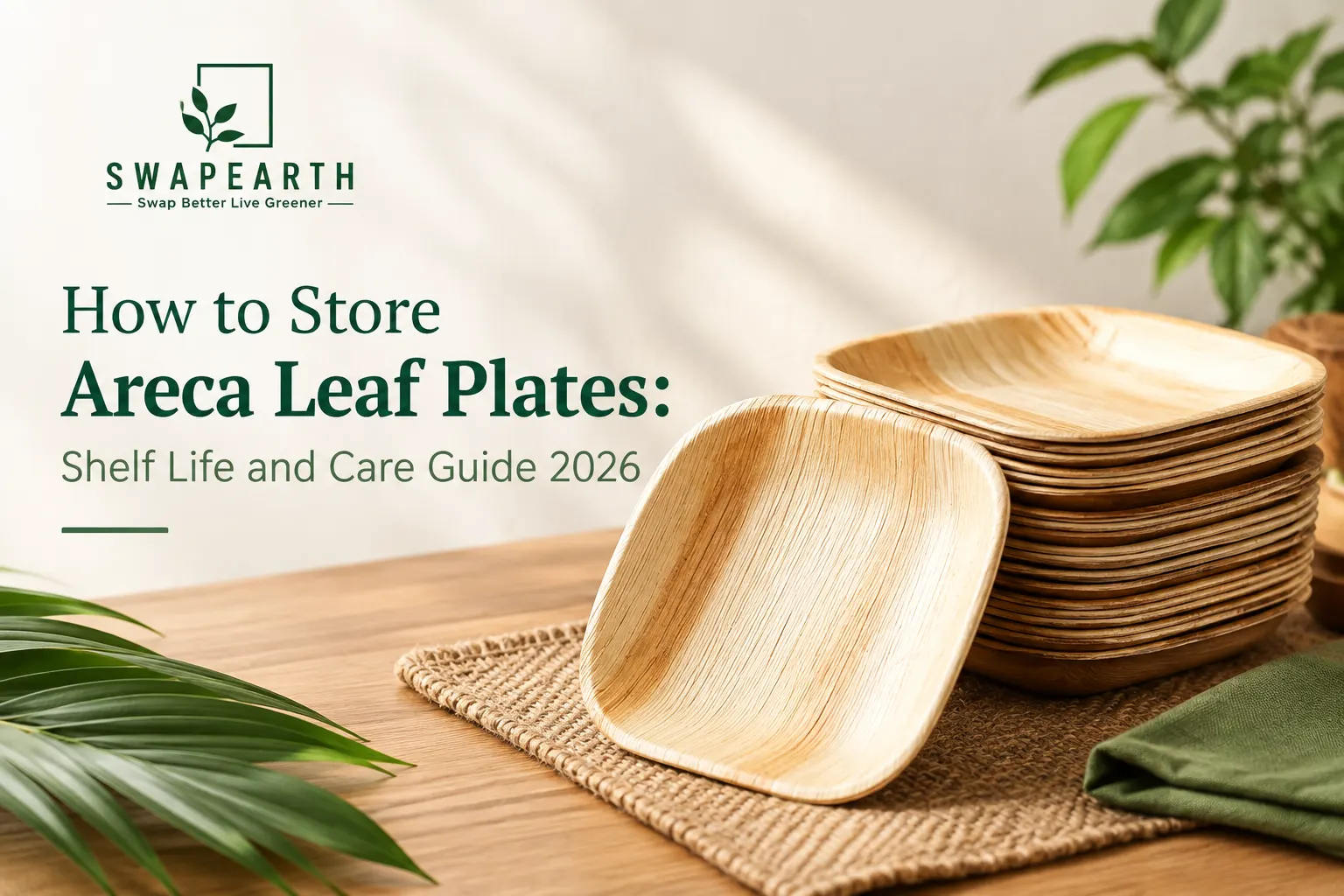
How to store areca leaf plates? Learn areca leaf plates shelf life, storage and care tips from swapearth. Keep plates dry, fresh & mold-free. Read now
"Areca plates don't expire like food, but moisture can spoil them. Keep them sealed, cool, and dry, and they'll be ready whenever you are." - swapearth
How to Store Areca Leaf Plates: Shelf Life and Care Guide 2026
How to Store Areca Leaf Plates properly can make a significant difference to their shelf life, appearance, strength, and overall usability. Because areca leaf plates are made from natural plant material, they need more care during storage than conventional plastic or synthetic tableware.
In general, Areca Leaf Plates Shelf Life can be around 12 to 24 months when the plates are properly processed, securely packaged, and stored in suitable dry conditions. However, the exact shelf life can vary depending on the manufacturer, packaging, humidity, temperature, and storage environment.
Whether you are a restaurant, caterer, event planner, wholesaler, importer, or household buyer, the basic rule is simple: keep areca plates clean, dry, protected, and properly packaged.
What Is the Shelf Life of Areca Leaf Plates?
The shelf life of areca leaf plates depends on how they are manufactured, packaged, transported, and stored.
Many suppliers specify a shelf life of approximately 12–24 months when areca plates remain sealed and are stored in a cool, dry environment. Some manufacturers may specify a different period, so the supplier's product specifications should always take priority.
The natural fibres used to make areca tableware can remain stable for a long time when protected from excess moisture. However, poor storage conditions can reduce the usable life of the product considerably.
How Long Do Areca Leaf Plates Last in Storage?
Under suitable storage conditions, areca leaf plates can generally remain usable for one to two years.
For example, an unopened carton stored on a raised pallet in a dry warehouse is less exposed to moisture than an opened pack left beside a sink or in a humid room.
For bulk buyers, it is useful to record:
-
Manufacturing or packing date
-
Supplier-recommended shelf life
-
Date of receipt
-
Packaging condition
-
Storage location
-
Stock rotation date
Using a first-in, first-out (FIFO) system also helps ensure older stock is used before newer stock.
Do Areca Leaf Plates Expire?
Areca leaf plates do not necessarily have an expiry date in the same way as food products. Instead, manufacturers may provide a recommended shelf life during which the product is expected to maintain its intended quality when stored correctly.
This means Areca Leaf Plates Expiry is primarily a question of product condition and manufacturer specifications.
Before using older stock, inspect the plates carefully. Do not use them for food service if they show visible mold, unusual odors, dampness, significant softening, water damage, or serious structural deterioration.
How to Store Areca Leaf Plates: Step-by-Step
Proper Areca Leaf Plates Storage does not require complicated equipment. A few consistent habits can protect your stock.
1. Keep Plates in Their Original Sealed Packaging
Whenever possible, keep unused areca plates in their original sealed packaging until they are required.
The packaging helps protect the plates from:
-
Moisture
-
Dust
-
Dirt
-
Handling
-
Environmental contamination
Avoid opening several packs at once. Open only what you need and reseal remaining stock as soon as possible.
For businesses managing large quantities, label opened cartons and use the oldest suitable stock first.
2. Choose a Cool, Dry Storage Area
The best location for storing areca plates is a clean, dry, and well-maintained storage area.
Keep cartons away from:
-
Wet floors
-
Damp walls
-
Sinks and water sources
-
Leaking pipes
-
Areas with condensation
-
Excessively humid rooms
-
Poorly ventilated spaces
Do not place cartons directly on concrete floors. Instead, use pallets, shelving, or another raised surface to reduce exposure to ground moisture.
3. Protect Plates from Direct Sunlight and Heat
Natural tableware should also be protected from prolonged direct sunlight and excessive heat.
Avoid storing areca plates beside:
-
Windows receiving strong sunlight
-
Ovens
-
Heaters
-
Hot machinery
-
Other heat-producing equipment
Excessive heat and repeated environmental changes can affect the appearance and physical condition of natural tableware.
4. Protect Opened Packs from Moisture
Once a pack has been opened, avoid leaving the remaining plates exposed to the surrounding environment.
For smaller quantities, you can use a clean, dry airtight container or a strong resealable bag to provide additional protection from moisture and dust.
However, make sure the container is completely dry before placing the plates inside. Sealing moisture inside the container can create the opposite effect and increase the risk of deterioration.
5. Keep the Storage Area Clean and Ventilated
Good storage is not only about the packaging. The surrounding environment matters too.
Maintain reasonable airflow, inspect cartons regularly, and check for:
-
Water leaks
-
Condensation
-
Insects
-
Damaged packaging
-
Damp walls
-
Moisture accumulation
Clean and organized storage also makes stock rotation and inspection easier.
Factors That Affect Areca Leaf Plates Durability
Several factors influence Areca Leaf Plates Durability during storage.
Moisture and Humidity
Humidity is one of the most important factors to control.
Because areca plates are made from natural plant fibres, prolonged exposure to moisture can soften the material and increase the risk of mold or fungal growth.
This is particularly important in humid climates and during India's monsoon season.
If you operate a warehouse in a high-humidity area, pay extra attention to ventilation, raised storage, packaging integrity, and signs of condensation.
Storage Temperature
A cool, dry environment is generally preferable to a hot or poorly ventilated storage area.
There is no single universal temperature requirement for every areca plate because manufacturing, processing, and packaging methods can differ.
For that reason, always follow the storage conditions provided by your supplier when they are available.
Packaging Quality
Packaging plays an important role in maintaining product quality.
Well-sealed inner packs and sturdy outer cartons can reduce exposure to moisture, dust, and handling damage.
This becomes especially important for wholesalers and exporters because products may spend considerable time in warehouses and during transportation.
For B2B buyers, packaging quality should therefore be considered alongside plate thickness, shape, finish, and product consistency.
Areca Leaf Plate Care: Signs of Spoilage
Even with proper Areca Leaf Plate Care, stored products should be inspected before use.
Signs Your Areca Plates Should Not Be Used
Check for:
-
Visible mold or fungal spots
-
Musty or unusual odors
-
Damp or softened fibres
-
Significant warping
-
Water damage
-
Unusual moisture-related discoloration
-
Serious cracks or structural deterioration
If plates appear contaminated or significantly damaged, do not use them for serving food.
Do not try to clean mold from affected plates and return them to food service. Separating damaged stock from usable stock can also help prevent the problem from spreading.
What Should You Do With Old or Damaged Areca Plates?
Areca leaf tableware is commonly marketed as biodegradable and compostable, but actual decomposition depends on factors such as product composition, thickness, composting conditions, and local waste infrastructure.
For this reason, there is no universal decomposition time that applies to every areca plate.
Some suppliers may state periods such as 60–90 days, while other sources give longer ranges. Instead of treating a specific number such as "180 days" as a guarantee, check the manufacturer's product information and follow your local composting or waste-management guidance.
Areca Plates Storage for Bulk Buyers, Caterers and Restaurants
For businesses, Areca Plates Storage is an important part of inventory management.
Poor storage can result in damaged stock, unnecessary waste, and avoidable replacement costs.
Warehouse Storage Tips
If you purchase areca plates in bulk:
-
Store cartons on pallets or raised shelving.
-
Keep products away from damp walls and floors.
-
Keep unopened packs sealed.
-
Maintain good ventilation.
-
Check cartons regularly for water damage.
-
Avoid excessive stacking that could crush lower cartons.
-
Use a first-in, first-out inventory system.
-
Inspect stock more frequently during humid seasons.
-
Keep storage areas clean and free from unnecessary chemicals or strong odors.
-
Follow the supplier's recommended storage conditions.
For international shipments, packaging should also be suitable for the expected transportation and storage environment.
How to Store Areca Plates for Events and Catering
Caterers and event planners often need hundreds or thousands of plates for weddings, festivals, corporate events, restaurants, and other functions.
Buying ahead can help with availability, but excessive stock can create unnecessary storage risk.
A practical approach is to estimate your expected consumption, check supplier lead times, and maintain a reasonable safety stock.
Before a busy event season, inspect existing stock first. If the packaging is damaged or the plates have been exposed to moisture, replacing affected stock before the event can help avoid last-minute problems.
Areca vs. Sal Siali Leaf Plates: Storage Considerations
Areca and Sal Siali are both used for natural leaf-based tableware, but their material, manufacturing process, thickness, packaging, and construction can differ.
Therefore, storage recommendations for one product should not automatically be applied to another.
Whether you are purchasing palm leaf plates, areca plates, or Sal Siali products, always check the specific supplier's storage instructions and stated shelf life.
Shelf Life vs. Sustainability: What Happens After Use?
One of the useful characteristics of natural tableware is that its storage life and end-of-life behavior are two different considerations.
During storage, the goal is to keep the plate dry and protected so that it remains stable and usable.
After use, compostable areca tableware may be suitable for biological decomposition under appropriate conditions. However, the actual process depends on the product and the disposal environment.
This is why terms such as eco-friendly tableware, natural tableware, biodegradable tableware, and sustainable tableware should be considered alongside the product's actual composition, certifications, and disposal requirements.
Quick Areca Leaf Plates Storage Checklist
Before storing your next batch of areca plates, remember:
✓ Keep packs sealed until needed
✓ Store cartons off the floor
✓ Choose a clean, cool and dry area
✓ Keep plates away from water and condensation
✓ Protect stock from direct sunlight and excessive heat
✓ Reseal opened packs
✓ Maintain good ventilation
✓ Inspect regularly for mold or moisture damage
✓ Use FIFO inventory rotation
✓ Follow the manufacturer's storage instructions
Conclusion
Learning How to Store Areca Leaf Plates properly is simple, but it can make a significant difference to product quality and inventory management.
Keep unused plates in their original packaging, store them in a clean and dry environment, protect them from moisture and excessive heat, reseal opened packs, and inspect your stock regularly.
For restaurants, caterers, wholesalers, importers, and event businesses, good storage practices can help reduce unnecessary product loss and keep natural tableware ready when it is needed.
Areca leaf plates can be a practical option for businesses looking for natural and sustainable alternatives to conventional disposable tableware. As with any natural product, however, the manufacturer's storage instructions, packaging specifications, and product certifications should remain the primary reference.
Why Choose SwapEarth?
At SwapEarth, we focus on sustainable tableware designed for businesses looking for practical alternatives to conventional disposable products and is one of the Trusted Areca Palm Leaf Tableware brand in India
.For B2B buyers, sourcing is about more than appearance. Product consistency, packaging, durability, storage, and reliable supply all matter when planning regular tableware requirements.
If you're looking for natural areca leaf tableware for restaurants, catering, hospitality, events, or bulk requirements, SwapEarth can help you explore suitable solutions for your business.
Looking for an export-ready sustainable tableware supplier? Let's connect with SwapEarth and explore the right solution for your business.
Follow us on Instagram, Facebook, LinkedIn and Pinterest for more updates.
Frequently Asked Questions
How long can you store areca leaf plates?
Properly manufactured and packaged areca leaf plates can often be stored for approximately 12–24 months under suitable dry conditions. However, the exact shelf life depends on the manufacturer, packaging, and storage environment.
Do areca leaf plates have an expiry date?
They may have a recommended shelf life rather than a food-style expiry date. Always follow the manufacturer's stated storage period and inspect the product before use.
Can areca plates get moldy?
Yes. Excessive moisture and humidity can increase the risk of mold because areca plates are made from natural plant fibres. Keeping them dry, sealed, and properly stored helps reduce this risk.
Where should I not store areca plates?
Avoid damp basements, outdoor sheds exposed to moisture, bathrooms, wet floors, areas near leaking pipes, and locations exposed to rain or condensation. Direct sunlight and excessive heat should also be avoided.
What is the best way to store opened areca plates?
Place the remaining plates in a clean, completely dry airtight container or resealable bag and keep them in a cool, dry storage area. Avoid sealing moisture inside the container.
How should bulk buyers store areca plates?
Bulk buyers should keep cartons elevated on pallets or shelving, maintain good ventilation, protect products from moisture, inspect packaging regularly, and use FIFO stock rotation.