
Cheap vs Premium Disposable Tableware: Cost & Quality Compared
Cheap vs Premium Disposable Tableware
Compare cheap vs premium disposable tableware based on cost, quality, and value. Explore eco-friendly and bulk disposable tableware options to make the right buying decision.
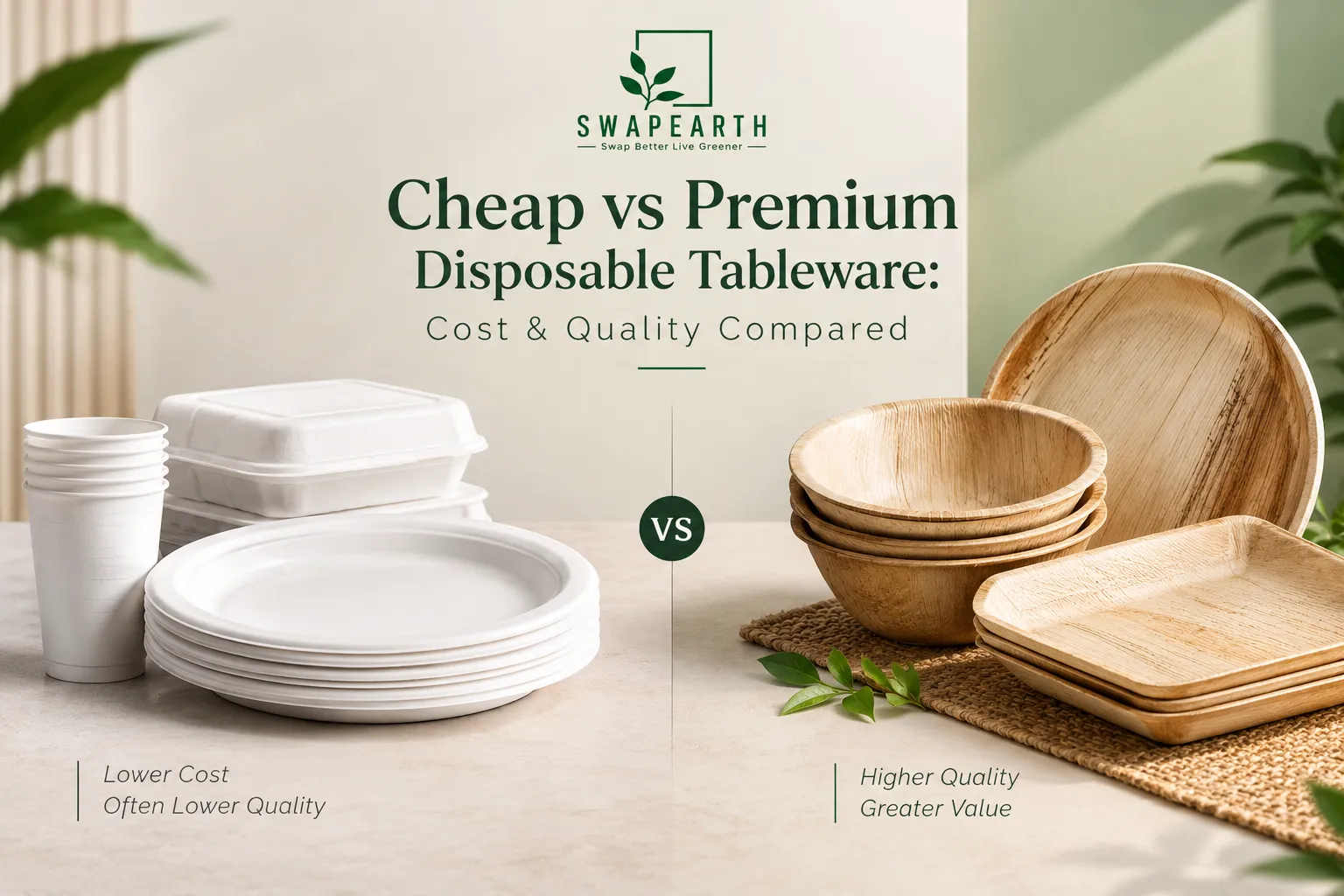
Cheap vs premium disposable tableware differs in cost, quality, and value. Learn about premium disposable tableware, cheap disposable tableware, and sustainable disposable tableware to help bulk tableware buyers make informed purchasing decisions.
“Quality matters more than price when choosing disposable tableware.”
Cheap Disposable Tableware
Cheap disposable tableware is commonly used where affordability and large quantities are the primary considerations.
For businesses serving large numbers of customers, these products may be suitable when the tableware meets the required food-contact and performance standards.
Typical characteristics include:
1. Initial Purchase Price
Cheap disposable tableware generally has a lower unit price, making it attractive for large events, takeaway services, and businesses operating with tight budgets.
Premium disposable tableware may cost more per piece because of its material, construction, design, or manufacturing specifications.
For bulk tableware buyers, even a small difference in unit price can significantly affect the total order value. Nevertheless, comparing products with different sizes, materials, and performance levels can lead to misleading conclusions.
Important points to consider:
2. Cost Per Use
Cost per use provides a more practical way to compare disposable tableware options.
For example, imagine two products are available for different prices. The cheaper product may be suitable for dry snacks but may not perform well with heavier meals or oily foods. A stronger alternative could be more appropriate for those serving conditions.
The more expensive option may provide better value if it consistently meets the intended requirements and reduces product failures.
However, premium products do not always deliver lower overall costs. The result depends on the product specifications and how it is used.
3. Bulk Purchasing and Long-Term Value
Bulk Disposable Tableware purchases can reduce the unit price through volume-based pricing. However, buyers should consider more than the discount offered.
Before placing a bulk order, evaluate:
Disposable Tableware Quality: What Should Buyers Check?
Disposable tableware quality depends on its material, durability, construction, and suitability for different foods. Buyers should focus on these important factors before purchasing.
1. Strength and Durability
Resistance to bending, cracking, and leakage.
Suitability for heavy, hot, oily, or moist foods.
Ability to maintain shape during serving.
2. Material and Construction
Paper
Lightweight and practical for everyday use.
Plastic
Lightweight, with environmental considerations depending on the type.
Bagasse
Made from sugarcane fibre
Areca Leaf
Made from naturally shed areca palm leaf sheaths.
3. Appearance and Presentation
4. Food Safety and Consistency
1. Initial Price
Cheap
Usually has a lower upfront cost.
Premium
Often costs more due to materials, design, or construction.
2. Material Options
Cheap
Available in various materials depending on the product.
Premium
May offer specialised materials and finishes.
3. Strength and Durability
Cheap
Performance depends on thickness and manufacturing quality.
Premium
May provide better strength for specific serving needs.
4. Product Consistency
Cheap
Quality depends on the supplier and manufacturing process.
Premium
Consistency also depends on quality control and supplier standards.
5. Design and Appearance
Cheap
Generally focuses on simple, functional designs.
Premium
May feature refined shapes, textures, and finishes.
6. Bulk Availability
Cheap
Often suitable for budget-conscious bulk purchases.
Premium
Available for businesses prioritising presentation and specific performance requirements.
7. Sustainability
- Both options may have different environmental impacts depending on their materials and disposal methods.
Key takeaway: The best choice is not always the cheapest or most expensive. Compare product quality, performance, and overall cost before purchasing.
Common Mistakes to Avoid When Buying Disposable Tableware
Even experienced buyers can make purchasing decisions that increase costs or lead to unsuitable products.
Avoid these common mistakes:
Choosing only by price:
A low unit price does not guarantee the best overall value.
Ignoring food requirements:
Not every plate or bowl is suitable for hot, oily, heavy, or liquid foods.
Assuming premium always means better:
Evaluate actual product performance rather than marketing labels.
Overlooking environmental claims:
Verify whether products are biodegradable, compostable, or recyclable under the relevant conditions.
Ordering bulk quantities without samples:
Test the product before committing to a large purchase.
Ignoring storage conditions:
Moisture, heat, and unsuitable storage can affect certain materials.
Failing to compare like-for-like products:
Different sizes, materials, and quantities make direct price comparisons unreliable.
How to Choose the Right Disposable Tableware
Before making a final purchasing decision, use the following checklist to compare available options.
Identify the application:
Determine whether the products are intended for restaurants, takeaway orders, catering, events, or retail distribution.
Set a realistic budget:
Calculate the expected quantity and compare total purchasing costs.
Check material specifications:
Confirm the product's suitability for the intended food and serving conditions.
Test the quality:
Evaluate strength, leakage resistance where relevant, finish, and consistency.
Assess sustainability:
Review material composition and verify disposal or compostability claims.
Compare suppliers:
Check product availability, minimum order quantities, documentation, and delivery reliability.
Calculate overall value:
Consider purchase price, wastage, storage, and operational suitability together.
Why Choose SwapEarth?
SwapEarth offers eco-friendly areca leaf tableware made from naturally shed palm leaf sheaths. Choose sustainable alternatives for restaurants, catering, and events without compromising on natural presentation.
Website: https://swapearth.com/
Email: info@swapearth.com
Phone: +91 96869 29797
Frequently Asked Questions
What is the difference between cheap and premium disposable tableware?
Cheap disposable tableware focuses on affordability, while premium options may offer better durability, refined designs, and consistent quality depending on the product.
Is premium disposable tableware worth the extra cost?
Yes, it can be worthwhile when durability, food presentation, and product consistency are priorities. Compare specifications and test samples before purchasing in bulk.
Is eco-friendly disposable tableware a good alternative to plastic?
Yes, options such as areca leaf and bagasse tableware can reduce reliance on conventional plastic. Their environmental benefits depend on product composition and disposal methods.