
Areca Leaf Plate Manufacturing & Sizes: 2026 Guide
Areca Leaf Plate Manufacturing
Areca leaf plate manufacturing is the process of turning naturally fallen areca palm sheaths into biodegradable plates, bowls and trays using water, heat and pressure. SwapEarth works with manufacturing partners across Karnataka to supply graded, uncoated areca plates in round, square and bowl formats for bulk and export orders.
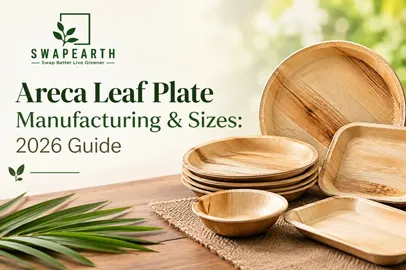
Areca leaf plate manufacturing turns naturally fallen areca palm sheaths from Karnataka into sturdy plates and bowls. Each sheath is sorted, washed, dried and hot-pressed, with no glue, synthetic coating or plastic liner. SwapEarth offers round, square and bowl formats for wholesale, private-label and export orders, with samples and documentation support.
Areca leaf plate manufacturing turns fallen palm sheaths into sturdy tableware, with no trees cut and no plastic lining.
Areca Leaf Plate Manufacturing & Sizes: 2026 Guide
Eco-friendly tableware is no longer a niche, and areca palm leaf plates are leading the shift. Restaurants, caterers, wholesalers and importers are replacing plastic and coated disposables with a natural alternative that looks good and holds up on the table. But choosing the right product takes more than swapping out plastic. It helps to understand areca leaf plate manufacturing, raw material quality, sizes, certifications and what to ask suppliers before a bulk order.
In this 2026 guide, we walk through how these plates are made, from raw material to packed carton. We also share a size chart, compare round and square shapes, explain the certifications to check and cover what to know when sourcing from India.
What Is Areca Leaf Plate Manufacturing?
It is the process of turning naturally fallen areca palm leaf sheaths into sturdy, disposable plates, bowls and trays using water, heat and pressure. The "leaf" is the sheath at the base of the frond, which wraps around the palm and drops naturally once it dries. No trees are cut for this purpose, and farmers can earn extra income from material that would otherwise often go unused.
When made the natural way, areca plates need no glue, synthetic coating or plastic lining. That makes them a practical option for businesses that want dependable disposable tableware with a lighter environmental footprint.
Why Karnataka Leads Areca Leaf Plate Manufacturing
Karnataka is India's largest areca nut-growing state, with plantations around Shivamogga, Chikkamagaluru, Uttara Kannada and Davanagere. More palms mean more fallen sheaths nearby, which keeps raw material fresh and transport distances short. Skilled workers and machine fabricators are also close at hand.
For buyers, this local ecosystem supports steadier supply and shorter lead times. For SwapEarth, it means connecting natural agricultural resources with the growing demand for biodegradable tableware.
Raw Material Quality: Why Leaf Thickness and Size Matter
Not every sheath makes a good plate. Raw material quality directly affects the strength, appearance and usability of the finished product.
Thickness decides strength. Thicker, well-formed sheaths suit products that need more rigidity, while thin sheaths tend to crack under the press.
Size decides diameter. Large sheaths become 10- and 12-inch plates, while smaller ones become bowls and 5-inch plates.
Condition decides quality. Good units grade every sheath and reject any with fungus, holes, contamination or dark patches.
Areca Leaf Plate Manufacturing Process, Step by Step
Here is how the process typically works inside a well-run unit. Exact steps can vary by manufacturer.
Collection and sorting:
Naturally fallen sheaths are gathered from farms and nearby areas, then sorted by size, thickness and condition.
Washing:
Sheaths are scrubbed and rinsed to remove soil, dust and surface impurities.
Soaking:
A short soak makes the fibre flexible so it is less likely to crack during pressing.
Drying and moisture control:
Sheaths are dried until the moisture level is right for pressing, which helps prevent moisture-related defects.
Hot pressing and shaping:
Each sheath is placed between heated metal dies, and pressure shapes it into a plate or bowl. Different moulds produce round plates, square plates, bowls and compartment trays.
Trimming and finishing:
Excess material is trimmed, and edges are smoothed and checked for cracks and rough spots.
Sanitising (where used):
Some units add a UV or steam treatment to help reduce microbes before packing.
Inspection and packing:
Every plate is checked for shape, cleanliness, strength and appearance, then sleeved and cartoned.
Our Manufacturing Partners and Capacity
SwapEarth works with a network of manufacturing partners across Karnataka rather than relying on a single unit. That setup helps us scale for festive-season or export orders and match each order to the right press line, whether it is round plates, square plates, bowls or compartment trays.
Capacity, lead times and availability depend on the specifications you choose, raw material supply and order quantity. Share your requirements early, and we can confirm production schedules, samples and bulk arrangements before you commit.
Key Benefits of Areca Leaf Plates
Natural material:
made from naturally fallen areca palm sheaths.
Biodegradable and compostable:
they break down under suitable conditions without leaving synthetic plastic residues.
No synthetic coating:
no plastic liners, adhesives or artificial colours are needed.
Sturdy for serving:
suitable for many hot and freshly prepared foods, depending on the product design.
Distinctive appearance:
natural grain gives events and retail shelves a premium, earthy look.
Who buys them?
Restaurants, cafes and cloud kitchens, caterers and wedding planners, hotels and event organisers, wholesalers and distributors, retail brands, and importers sourcing natural tableware as single-use plastic rules tighten in many markets. Knowing the end use helps you choose the right sizes, shapes and order quantities.
Areca Leaf Plate Size Chart
Choosing the right size improves food presentation, supports portion control and reduces waste.
Dimensions are indicative. Actual available sizes may vary by supplier and product specifications.
| Shape | Size (inches) | Best for |
|---|---|---|
| Round | 4 inch, 10 cm | Sweets, dips and small servings |
| Round | 5 inch, 12.5 cm | Snacks and small servings |
| Round | 6 inch, 15 cm | Starters, desserts and side dishes |
| Round | 8 inch, 20 cm | Snacks, light meals and takeaway |
| Round | 10 inch, 25 cm | Full meals, rice dishes and catering |
| Round | 12 inch, 30 cm | Large meals, thali and buffets |
| Square | 6x6 inch, 15x15 cm | Starters and desserts |
| Square | 8x8 inch, 20x20 cm | Starters and light mains |
| Square | 10x10 inch, 25x25 cm | Mains and buffets |
| Bowls | 4 to 6 inch, 10 to 15 cm | Curries, salads and sweets |
Round vs Square Plates
Round plates feel traditional and stack neatly, which makes them ideal for thali meals, snacks and everyday food service. Square plates look modern and offer more flat surface, which makes them popular for starters, plated desserts, buffets and parties. Many buyers order both and mix them at the same event.
Areca Plates 25 cm and 10 Inch
Areca plates 25 cm in diameter are the everyday dinner size, with enough room for rice, curry, bread and sides. Since 25 cm is about 9.8 inches, 10 inch areca plates are essentially the same size. If you can stock only one size, start here. Confirm exact dimensions, usable serving area and thickness with your supplier, as these can vary between manufacturers.
Other Shapes
Bowls:
best for curries, salads, sweets and thin soups.
Rectangular plates:
useful for starters, snacks and takeaway.
Compartment trays:
keep dishes separate, which suits thali-style meals and combo servings.
Availability depends on the moulds and product range, so ask for current options.
Areca Leaf Plates vs Plastic Plates
| Feature | Areca leaf plates | Plastic plates |
|---|---|---|
| Material | Natural areca sheaths | Synthetic polymers |
| Coatings | Can be made without coatings | May include additives |
| Biodegradability | Biodegradable under suitable conditions | Most conventional plastics are not readily biodegradable |
| Appearance | Natural grain and texture | Usually uniform |
| Disposal | Composting where suitable facilities exist | Depends on plastic type and local recycling |
Plastic can offer uniformity, but regulations on single-use plastics are tightening in many markets. Areca plates give businesses a natural, good-looking alternative that appeals to eco-conscious customers. A note on compostability: Because areca plates come from fallen sheaths, production needs no extra land, fertiliser or irrigation. When made without synthetic coatings, they can break down in a composting environment, but the time varies widely with moisture, temperature and the type of facility. In landfills or dry conditions, decomposition can be much slower, so responsible waste management still matters.
Certifications: What Buyers Should Check
Any supplier can call their plates "premium." A certified supplier can prove it. Ask for documents, not promises.
ISO certification relates to management systems, not to a product being automatically food-safe or biodegradable. Always check the issue date, the issuing certification body and the scope of the certificate. Depending on your destination market, you may also need food-contact test reports, compostability certificates or other product documents. Requirements differ by market and intended use, so request documents specific to your destination before you order. Ask SwapEarth which certificates and test reports apply to the product and manufacturing partner you are considering.
Quality Control in Areca Leaf Plate Manufacturing
Quality control should happen at every stage, not only at the end. Key checks include:
Sheath grading:
selecting raw material by thickness, size and condition.
Moisture checks:
confirming sheaths are ready for pressing.
Visual inspection:
looking for cracks, mould, contamination and excessive surface defects.
Shape and dimensions:
matching plates to the agreed specification.
Structural and leak testing:
testing sample plates for rigidity and suitability for the intended food.
Packaging inspection:
making sure cartons protect plates from damage and moisture.
For buyers looking for food-safe plates, this is where confidence is built: documented checks, test reports and samples you can try with your own menu. Agree on acceptable natural variation before confirming a large order.
Bulk Orders, Private Label and Export from India
India is a leading source for areca plates, and importers, wholesalers, distributors and food-service companies can explore bulk orders in a range of sizes, shapes and packaging formats. SwapEarth supports areca leaf plate manufacturing for wholesale and export orders in standard sizes and custom shapes.
We can also discuss private-label packing, with your brand name, logo and barcode on sleeves and cartons, depending on order volume and specifications. For importers, we can help with documentation, palletising and container loading. Before finalising an international order, confirm minimum order quantities, production timelines, shipping arrangements, documentation and destination-specific compliance.
Storage and Shelf Life
-
Store plates in a cool, dry, well-ventilated area.
-
Keep cartons off the floor and away from direct sunlight, heat and moisture.
-
Use sealed or protective packaging to limit exposure to humidity and dust.
-
Avoid placing heavy loads on plates, which can cause deformation.
Shelf life depends on moisture levels, packaging and storage conditions. Damp conditions can cause mould, so moisture is the one thing to avoid. Ask your supplier for product-specific shelf-life guidance, especially for long-term storage.
Why Choose SwapEarth?
-
Is one of the Trusted Areca Palm Leaf Tableware brand in India
-
Plates made from carefully graded Karnataka sheaths
-
A network of manufacturing partners for flexible capacity
-
A range of sizes and shapes for different commercial uses
-
Bulk, private-label and export support
-
Honest guidance on sizes, shapes and documents
Looking for areca leaf plate manufacturing partners in India? Contact SwapEarth to explore available sizes, request samples and discuss your wholesale or export requirements.
Follow us: LinkedIn | Facebook | Instagram | Pinterest
SwapEarth – Naturally Made. Responsibly Sourced.
Frequently Asked Questions
Are areca leaf plates food-safe?
They are designed for food serving and made from natural sheaths without glue or synthetic coatings. Food safety still depends on the raw materials, hygienic production and applicable food-contact requirements. Importers can request ISO documents and food-contact test reports to match local rules.
How are areca leaf plates made?
Naturally fallen sheaths are collected, sorted, washed, softened, dried, then heat-pressed in moulds. The plates are then trimmed, inspected and packed.
Can areca plates hold soups, curries and liquid-rich dishes?
They can hold many curries and moderately moist foods, depending on thickness, depth and construction. Deep plates with a raised rim are popular for full meals. For thin soups, bowls work better than flat plates. Test a sample with your own food before a bulk purchase.
What sizes are available?
Round plates from 4 to 12 inch (about 10 to 30 cm), square plates from 6x6 to 10x10 inch, and bowls from 4 to 6 inch. Availability depends on the product range and specifications.
Are 25 cm and 10 inch areca plates the same?
Practically, yes. 25 cm is about 9.8 inches. Exact dimensions can vary slightly by manufacturer, so confirm them before ordering in bulk.
Are your plates certified?
Certification depends on the product and manufacturing partner. Request current certificates, food-contact documentation and compostability test reports, and check the issuing body, scope and validity.
Which export markets do you supply?
SwapEarth handles international enquiries, including buyers in the UK, the Netherlands and wider European markets. Tell us your destination, and we will guide you on shipping, documentation and compliance.