
A Buyer’s Guide to Sourcing Areca Palm Leaf Tableware from India
What International Buyers Should Know Before Ordering
A practical guide to product specifications, supplier evaluation, quality, packaging, logistics and reliable B2B sourcing from India.
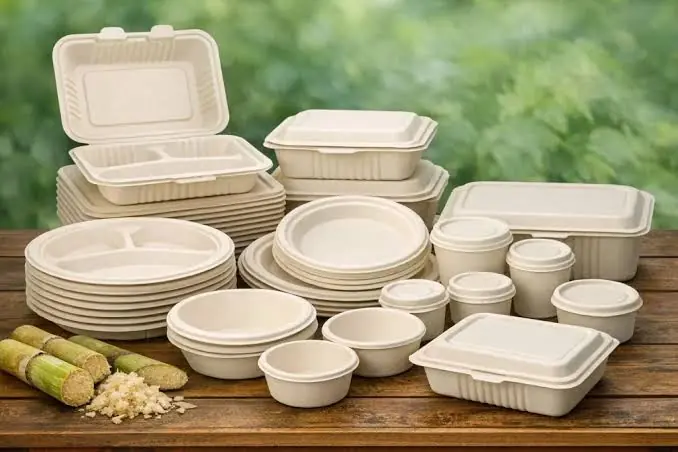
SourcingAreca Palm Leaf Tableware from India gives international buyers access to naturally sourced materials, established agricultural networks, and experienced manufacturing capabilities.
For importers, distributors, wholesalers, foodservice businesses, hospitality companies, and private-label brands in the US, UK, and Europe, choosing the right supplier involves more than comparing prices. Quality, manufacturing capacity, documentation, packaging, logistics, and long-term reliability all matter.
The right sourcing decision should consider the complete supply chain — from raw material and manufacturing to quality, documentation, packaging, logistics and repeat supply.
Why SourceAreca Palm Leaf Tableware from India?
India has a well-established ecosystem for areca palm products, particularly across southern India. Regions around Karnatakaand Karnataka’s Karnataka have strong areca-growing communities and manufacturing capabilities.
Naturally sourced areca palm leaves
Experienced manufacturing partners
Multiple tableware formats
Commercial-scale production
Export-oriented supply capabilities
Long-term B2B sourcing opportunities
Understand the Product
Areca palm leaf tableware is made from naturally shed areca palm leaves that are collected, cleaned, processed, and moulded into products such as:
Plates
Compartment plates
Bowls
Trays
Serving platters
Define Your Requirements
Before contacting suppliers, clearly specify the products and commercial requirements you need.
Product Details
Product type, size, weight, dimensions, shape and finish.
Packaging
Bulk, retail or private-label packaging requirements.
Order Quantity
Expected order quantity, MOQ expectations and order frequency.
Commercial Use
Define the intended application and destination market.
Evaluate the Supplier
A reliable supplier should be able to clearly explain its:
Raw Material Sourcing
Where the raw material comes from and how it enters the supply chain.
Manufacturing Process
Production methods, capacity and ability to maintain consistency.
Quality Control
Quality checks, product specifications and finishing standards.
Samples & MOQ
Sample process, minimum order quantities and commercial terms.
Packaging & Documentation
Packaging options and required export or destination-market documents.
Repeat Supply
Ability to support trial orders, commercial orders and repeat supply.
Always Request Samples
Never evaluate a supplier based only on photographs. Before placing a large order, assess samples for:
Size & Shape
Check dimensions, form and overall consistency.
Appearance
Review finish, texture, colour and natural characteristics.
Strength
Assess suitability for the intended application.
Packaging
Check protection, presentation and shipping suitability.
Check Quality & Compliance
Quality should be monitored from raw material selection through production and packaging. For food-contact tableware, buyers should also identify the requirements of their destination market, including applicable testing, documentation, labelling, and compliance requirements.
Do not rely only on claims such as “natural” or “eco-friendly.” Product claims should be supported by appropriate documentation where required.
Consider Packaging & Landed Cost
Packaging can affect product protection, storage, freight efficiency, and overall cost.
Packaging Details
Discuss quantity per pack and carton, carton dimensions and weight, palletisation, retail or bulk packaging, and private-label requirements.
Total Landed Cost
Include product price, packaging, inland transport, freight, insurance, duties, taxes, and other applicable charges.
Understand Shipping & Import Responsibilities
Before ordering, clarify the responsibilities of both buyer and supplier.
Shipping Details
Port of origin and destination, shipping method, Incoterms and expected transit time.
Documentation
Export documentation, import duties and taxes, and destination-market requirements.
Common Mistakes to Avoid
Lowest Price
Choosing a supplier based only on the lowest price.
No Samples
Ordering large quantities without evaluating samples.
Unclear Standards
Failing to define quality tolerances and packaging requirements.
Incomplete Checks
Not checking documentation, landed cost or import responsibilities.
Sample Assumption
Assuming one good sample guarantees consistent production.
No Repeat Plan
Failing to plan for future commercial and repeat orders.
Why Choose SwapEarth?
At SwapEarth, we understand that international buyers need more than a product—they need a reliable supply relationship.
Responsible Sourcing
Carefully selected manufacturing partners and naturally sourced raw materials.
Quality Focus
Attention to product specifications, finishing, consistency and packaging.
B2B Supply
Solutions for importers, distributors, wholesalers, foodservice, hospitality and private-label brands.
International Requirements
Support for specifications, documentation, packaging, logistics and destination-market requirements.
Final Thoughts
Sourcing areca palm leaf tableware from India can be a strong option for businesses looking for naturally sourced tableware for foodservice, hospitality, catering, and distribution applications. The right sourcing decision should consider the complete supply chain:
Raw Material
Manufacturing
Quality
Specifications
Documentation
Packaging
Logistics
Supply Reliability
Naturally Sourced. Responsibly Developed. Reliably Supplied.
Frequently Asked Questions
Who can sourceAreca Palm Leaf Tableware from India?
Importers, distributors, wholesalers, foodservice businesses, hospitality companies and private-label brands can explore B2B sourcing options.
What should I specify before requesting a quotation?
Define product type, size, weight, dimensions, shape, finish, packaging, order quantity and intended market.
Should I request samples before a bulk order?
Yes. Samples help buyers evaluate size, shape, appearance, strength, cleanliness, consistency and packaging before larger quantities.
What should be included in landed cost?
Consider product price, packaging, inland transport, freight, insurance, duties, taxes and other applicable charges.
What should I clarify before shipping?
Clarify ports, shipping method, Incoterms, transit time, export documentation, import duties and destination-market requirements.